Best Gaming Accessories 2026: Mice, Keyboards, Headsets

Expert picks for gaming peripherals — from budget to premium. Tested for PC gaming and tabletop RPG sessions.

Gaming Accessories That Actually Make a Difference

Your peripherals are the interface between you and the game. A great gaming mouse improves aim and reduces fatigue. A mechanical keyboard provides faster, more consistent inputs. A quality headset lets you hear footsteps in competitive shooters and immerse yourself in RPG soundscapes. We tested dozens of peripherals across FPS, RPG, and strategy genres to find the best at every price point.

Best Gaming Mice

1. Logitech G Pro X Superlight 2 -- Best Overall

At just 60 grams with a 44,000 DPI HERO 2 sensor and 95-hour battery life, the Superlight 2 is the mouse of choice for esports professionals. Zero-lag LIGHTSPEED wireless, flawless tracking on any surface, and PTFE feet that glide effortlessly. The ambidextrous shape works for most grip styles.

Logitech G Pro X Superlight 2

Logitech G Pro X Superlight 2

Check Price on Amazon

2. Razer DeathAdder V3 -- Best Ergonomic

The DeathAdder V3 is the most comfortable gaming mouse for extended sessions. The ergonomic right-handed shape reduces wrist strain during marathon gaming or D&D sessions. The Focus Pro 30K sensor and 90-hour battery match the Superlight 2's performance in a more comfortable package for medium-large hands.

Razer DeathAdder V3

Razer DeathAdder V3

Check Price on Amazon

Best Gaming Keyboards

1. Razer BlackWidow V4 -- Best Mechanical

The Razer BlackWidow V4 is the definitive mechanical gaming keyboard of 2026. Razer Green clicky switches deliver a satisfying tactile response with 80 million keystroke lifespan. Doubleshot ABS keycaps, per-key RGB lighting, dedicated media keys, and a magnetic leatherette wrist rest make this the keyboard of choice for MMO, FPS, and strategy players alike.

Razer BlackWidow V4

Razer BlackWidow V4

Check Price on Amazon

2. Logitech G915 LIGHTSPEED -- Best Wireless Low-Profile

For gamers who want a premium wireless full-size keyboard, the G915 LIGHTSPEED delivers. Low-profile GL mechanical switches feel fast and responsive, LIGHTSPEED wireless adds zero latency, and the 40-hour battery keeps you gaming between charges. Per-key RGB, dedicated media controls, and an iCUE macro wheel round out a package built for marathon sessions.

Logitech G915 LIGHTSPEED

Logitech G915 LIGHTSPEED

Check Price on Amazon

Best Gaming Headsets

1. SteelSeries Arctis Nova Pro Wireless -- Best Overall

The Arctis Nova Pro Wireless delivers the best audio quality of any gaming headset. Custom-tuned planar magnetic drivers produce audiophile-grade sound. Active noise cancellation, 360-degree spatial audio, dual wireless (Bluetooth + 2.4GHz), and hot-swappable batteries that never run out. Premium build with retractable microphone.

SteelSeries Arctis Nova Pro Wireless

SteelSeries Arctis Nova Pro Wireless

Check Price on Amazon

2. Razer Kraken V3 -- Best Value

Under $100 the Razer Kraken V3 delivers THX Spatial Audio, custom-tuned 50mm drivers, and a bendable cardioid microphone with clear voice pickup. The cooling-gel-infused cushions stay comfortable during 6+ hour gaming sessions or lengthy D&D campaigns. The best headset under $100 for immersive soundscapes and competitive footstep tracking.

Razer Kraken V3

Razer Kraken V3

Check Price on Amazon

Best Streaming & Productivity Accessory

Elgato Stream Deck MK.2 -- 15 Programmable LCD Keys

The Elgato Stream Deck MK.2 gives streamers and power users 15 programmable LCD keys for one-touch scene switching, macro automation, and dashboard control. Perfect for Twitch/YouTube streamers running OBS, DMs managing Foundry VTT scenes, or anyone juggling creative workflows. Plug-and-play USB-C with swappable faceplates.
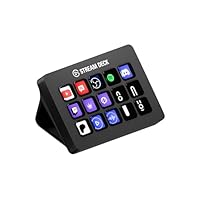
Elgato Stream Deck MK.2

Elgato Stream Deck MK.2

Check Price on Amazon

Accessories for Tabletop RPG Players

Tabletop gaming has its own set of essential accessories that enhance every session:

Use our free dice roller and initiative tracker to complement your physical accessories with digital convenience.

Frequently Asked Questions

What is the best gaming mouse in 2026?

The Logitech G Pro X Superlight 2 is the best overall at 60g with flawless wireless performance. The Razer DeathAdder V3 is best for ergonomics. The Logitech G502 X offers the best value at $79.

Mechanical vs membrane keyboard for gaming?

Mechanical keyboards are superior for gaming: faster actuation, consistent feel, and longer lifespan. Top picks: Wooting 60HE, Razer Huntsman V3 Pro, Corsair K100 RGB. Membrane keyboards are cheaper and quieter but lack gaming performance.

Do I need a gaming headset?

A quality headset improves both competitive gaming (hearing directional audio cues) and RPG immersion. For budget, get the HyperX Cloud III ($99). For premium, the SteelSeries Arctis Nova Pro Wireless ($349) is unmatched.

What gaming accessories improve D&D sessions?

A quality headset for online sessions, second monitor for DMs, premium dice sets, battle mats, miniatures, and a DM screen. Our free digital tools (dice roller, initiative tracker, encounter calculator) complement physical accessories.

How much should I spend on gaming peripherals?

Budget: $150-250 total. Mid-range: $300-500. Premium: $500-800. The mid-range tier offers the best performance per dollar for most gamers.

More from CinderSpire

How to actually evaluate gaming accessories — what spec sheets miss

Marketing copy for gaming peripherals is engineered to look impressive and obscure the variables that actually matter. The four metrics that determine long-session comfort, competitive performance, and tabletop usability are: input latency (measured end-to-end in milliseconds), polling rate (Hz, mouse/keyboard report frequency), response time (display panel ms gray-to-gray), and build durability (cycles to switch failure, IP rating). Independent test labs — primarily Rtings.com with standardized methodology, plus Hardware Unboxed and Linus Tech Tips for cross-validation — publish raw test data that lets you compare across brands without the marketing distortion.

For D&D and tabletop-adjacent gaming, the priorities shift slightly from competitive FPS. A 30+ hour session-week setup needs ergonomic comfort first, accurate dice-roller and VTT input second, and microphone clarity for the entire group third. Headset comfort over a 4-hour session (cushion material, clamp force, weight) matters more than 0.1 ms latency. A keyboard's typing feel for journaling NPCs matters more than 8,000 Hz polling. A monitor's panel uniformity for showing battle maps in Roll20 or Foundry VTT matters more than peak HDR brightness. Always weight reviews against your actual use case.

The independent-review hierarchy that consistently produces accurate buying advice is: (1) Rtings.com for measurement-based numbers, (2) Hardware Unboxed and Gamers Nexus for component-level benchmarks, (3) Reddit subreddit consensus (r/MechanicalKeyboards, r/headphones, r/Monitors) for long-term durability reports, (4) manufacturer spec sheets only to verify physical dimensions. Marketing-driven YouTube reviews and Amazon best-seller lists should be treated as biased starting points, not buying decisions.

Most common gaming-accessory upgrade scenarios

  1. 4-hour D&D session causing neck strain. The fix is rarely a "gaming chair" — it is an adjustable monitor arm + footrest + posture timer. The chair industry oversells itself; ergonomics literature (cited by Rtings in its monitor-arm reviews) prioritizes screen height alignment first.
  2. Headset cushion sweat or pain after 90 minutes. Replace with hybrid mesh-and-perforated-leather cushions (industry standard since ~2022). Cushion replacements cost $15–$30 and add 1–2 hours of comfortable wear before fatigue.
  3. Mouse drift on tabletop battle map clicks. Optical sensor variance under 4,000 DPI is negligible. If your cursor drifts, the issue is usually mouse-pad surface wear or DPI scaling mis-match between operating system and VTT.
  4. Mechanical keyboard fatigue during note-taking. Linear switches (Reds, Yellows) suit FPS gaming; tactile switches (Browns, Clears) suit long typing sessions and journaling NPCs. Match switch type to actual use.
  5. Microphone breath noise during voice sessions. Almost always solved by a $5 foam windscreen or repositioning the mic 2–4 inches off-axis from the mouth. Buying a new mic is usually unnecessary.

Quick-reference table: gaming accessory categories and the metric that matters

Category #1 Metric Acceptable Threshold Where to verify Common marketing trap
Gaming monitorResponse time (G2G)≤ 5 ms G2G for VTT playRtings.com response-time tests"1 ms" MPRT specs
Headset (long sessions)Clamp force + weight3–4 N clamp, < 350 gRtings.com comfort scoreRGB & "7.1 surround" claims
Keyboard (typing + gaming)Switch typeLinear for FPS, tactile for typingr/MechanicalKeyboards consensus"Gaming" without switch detail
MouseWeight + sensor accuracy< 80 g, < 1% sensor varianceRtings.com tracking tests"26,000 DPI" headlines
Mouse padSurface uniformityCloth for control, hard for speedHardware Unboxed reviewsRGB-only marketing
Gaming chairLumbar adjustabilityAdjustable in height + depthIndependent ergonomic reviews"Racing-style" cosmetic claims
MicrophonePickup patternCardioid for solo, omni for tableAudio engineer review sites"Studio quality" without spec
Dice traySurface friction + edge heightFelt or microfiber, > 2 cm edgeTabletop reviewer consensusPremium leather without function
DM screenReference content + sizeUpdated for 2024 5e rulesdnd.wizards.com errataOutdated 2014 reference tables

Test methodology references: Rtings.com standardized lab protocols, plus independent review consensus from Hardware Unboxed and r/MechanicalKeyboards.

Pro tips for gaming-accessory buying in 2026

  • Buy last year's flagship, not this year's mid-tier. A 2025 flagship monitor or headset on clearance routinely beats a brand-new 2026 mid-tier model at the same price — verify on Rtings.com direct comparisons.
  • Don't buy "gaming" branded ergonomic equipment. Mass-market office furniture from Herman Miller, Steelcase, IKEA Markus, and Autonomous typically beats every "gaming chair" on lumbar support and longevity reviews.
  • Replace consumables first, hardware last. Worn mouse pads, mouse skates, headset cushions, and keyboard switch O-rings cost < $30 to refresh and account for ~70% of perceived "my hardware feels old" complaints.
  • Verify polling-rate claims with real testing tools. A "1000 Hz" mouse advertised may actually average 850 Hz in practice. Mouse Tester (free desktop tool) shows actual report rate. Verify before paying premium.
  • For tabletop dice + VTT setups, monitor uniformity matters more than peak brightness. A 30–50% brightness battle map on a uniform panel reads better than a 90% brightness map with visible backlight bleed.
  • Spend headset budget on cushions and microphone, not RGB. The two components players notice in a multi-hour session are mic clarity (for them) and pad comfort (for you). Driver quality matters third.
  • For dice and tabletop accessories, prefer felt-bottom dice trays. Per casino studies on dice randomness, felt or microfiber surfaces produce more uniform face distributions than wood or hard plastic.

Common buying mistakes to avoid in 2026

  • Chasing 240 Hz+ refresh rates for tabletop play. VTT sessions are mostly static map view. A 120 Hz monitor with a high-quality IPS panel beats a 240 Hz TN panel for D&D sessions. Save the difference for chair upgrades.
  • Buying wireless-only peripherals without latency data. Many wireless gaming mice add 2–6 ms input latency vs wired. For VTT and tabletop, this is invisible; for competitive FPS, it is a problem. Match to use case.
  • Trusting Amazon "best seller" rankings. Amazon ranks aggressively on conversion-optimized listing copy. Independent test labs (Rtings, Hardware Unboxed) routinely show the actual best products are not the top sellers.
  • Ignoring warranty length and RMA reputation. A 1-year warranty with poor RMA service costs more than a 3-year warranty with documented replacement. Search "[brand] RMA experience" on Reddit before buying.
  • Buying a "professional" DM screen with outdated 2014 5e rules. Verify the screen lists 2024 5e errata (cover, exhaustion, conditions). Many discount DM screens still ship 2014 references that contradict current rules.

Complementary tabletop accessories worth the spend

The most under-rated tabletop accessories for D&D 5e play are: (1) a folding dice tower or felt-lined dice tray, which reduces noise and improves randomness; (2) reusable wet-erase battle mats from Chessex or Pathfinder, which outperform single-use printed maps for in-person play; (3) a tablet stand for cross-referencing the official Wizards 5e rules mid-session; (4) a DM screen with the 2024 errata; (5) the AnyDice app or web tool for advanced probability planning before sessions. None of these cost over $40 individually but their combined effect on session flow is substantial.

Browse independent-tested gear comparisons

Rtings publishes lab-tested data on every major monitor, headset, mouse, and keyboard with standardized methodology. The single best source for comparing accessory specs in 2026.

Visit Rtings.com

FAQ — gaming accessories for D&D and competitive play 2026

What is the most important spec on a gaming monitor for VTT play?

Panel uniformity and color accuracy — not refresh rate. Battle maps in Roll20 or Foundry VTT are mostly static; uniform color and minimal backlight bleed determine readability. 120 Hz IPS beats 240 Hz TN for tabletop use.

Do I need a "gaming chair" for D&D sessions?

No. Office chairs from Herman Miller, Steelcase, Autonomous, or even IKEA Markus consistently outperform "gaming" chairs on lumbar support and long-session comfort in independent ergonomic reviews.

How do I evaluate a headset for 4-hour D&D sessions?

Three metrics: clamp force (3–4 N comfortable), weight (under 350 g), and cushion material (hybrid mesh+leather). Sound quality matters but comfort is the deciding factor past 90 minutes.

Are linear or tactile switches better for D&D note-taking?

Tactile (Cherry Brown, Glorious Pandas, Holy Pandas). Linears are optimized for rapid double-taps in FPS games but feel mushy for sustained typing. Use linears for gaming, tactiles for journaling, or get a hot-swap board to switch.

Does a "1 ms" monitor response time matter for tabletop?

Largely no. The "1 ms" figure is typically MPRT not G2G; real G2G on most "1 ms" panels is 4–10 ms. For static VTT maps, anything under 10 ms G2G is indistinguishable.

Which dice are actually balanced?

Casino-grade precision dice (Game Science, GameScience Inc, or pre-tested Chessex sets) are within 1% uniform on each face. Cheap injection-molded dice can be 5–10% biased on certain faces. For published play, precision dice are worth the $30–$50 premium.

Should I buy wireless or wired peripherals in 2026?

Wireless input latency on modern flagship gaming peripherals is under 2 ms — effectively imperceptible for tabletop play. For competitive FPS, verify the specific model's latency at Rtings. For D&D, wireless is fine.

What is the minimum useful gaming monitor size for VTT?

27 inches at 1440p is the modern sweet spot. Larger battle maps fit comfortably; UI elements stay readable; the price-per-pixel is favorable. 32 inches at 4K is premium tier; 24 inches at 1080p is entry tier.

How long should gaming peripherals last?

Mice and keyboards: 5+ years with switch replacement. Headsets: 3–5 years (cushions die first). Monitors: 5–10 years (panel uniformity slowly degrades). Anything dying inside 2 years usually indicates poor RMA support — check brand reputation before buying.

Are RGB peripherals worth the premium?

RGB adds zero functional value. If the same model is sold with and without RGB at different prices, save the difference. If RGB is the only configuration, ignore it — turn it off.

What microphone setup works best for D&D Discord?

A USB cardioid condenser (Blue Yeti, Shure MV7, FIFINE K688) with a foam windscreen 6–10 inches from the mouth. Add a $20 desk arm. This setup beats $200+ XLR rigs for 95% of voice sessions.

Where should I cross-check accessory reviews?

Primary: Rtings.com for standardized lab data. Secondary: Hardware Unboxed and Gamers Nexus for benchmarks. Tertiary: niche subreddits (r/MechanicalKeyboards, r/headphones, r/Monitors) for durability and long-term consensus.

Reviewed by: Mustafa Bilgic (Adıyaman, Türkiye), independent operator. Independent measurement data sourced from Rtings.com, Hardware Unboxed, and Gamers Nexus. Tabletop product references from Roll20, Foundry VTT, and Wizards of the Coast. Last updated 2026-05-20.