D&D 5e Rules Quick Reference Guide
A table-ready rules reference for 5e combat, actions, conditions, rests, and common rulings, written for DMs and players who need fast answers without stopping the session.
Affiliate disclosure: As an Amazon Associate, CinderSpire Studio may earn from qualifying purchases through the product links below. Rankings are based on published specifications, official documentation, and cited third-party measurements, not paid placement or fake user reviews.
Quick Verdict
| Rule Area | Table Shortcut | Use During | Tool Pairing |
|---|---|---|---|
| Combat Order | Roll initiative, take turns, repeat rounds | Any combat start | Initiative Tracker |
| Action Economy | Movement, one action, possible bonus action, possible reaction | Every player turn | Dice Roller |
| Conditions | Apply condition effects before the affected creature acts | Control spells and monster abilities | Encounter Calculator |
| Resting | Short rest spends Hit Dice; long rest resets major resources | Session pacing | Character Generator |
Amazon Gear Picks
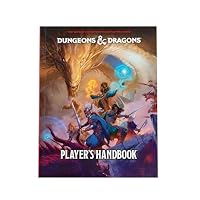
D&D Player's Handbook 2024
Core player rules, character options, spell reference
Check Price on Amazon

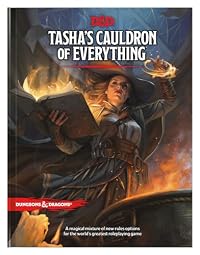
Tasha's Cauldron of Everything
Optional rules, subclasses, puzzles, magic items
Check Price on Amazon
SRD Attribution And Scope
This guide summarizes open D&D rules from the System Reference Document. The official SRD is published by Wizards of the Coast and the 5.1 Creative Commons version is available through D&D Beyond. This page is a quick reference, not a full replacement for the Player's Handbook, Dungeon Master's Guide, or Monster Manual.
The safest way to use a quick reference is to treat it as a flowchart. In play, identify the rule category first: combat order, action economy, attack roll, saving throw, condition, rest, or spell concentration. Once the category is clear, the ruling usually becomes straightforward. The hardest table delays happen when players debate multiple categories at once, such as movement, opportunity attacks, cover, and spell targeting in the same sentence.
For campaign-specific rulings, the DM should make a fast temporary call, note it, and verify the full text after the session. That preserves momentum and avoids teaching the table that every edge case requires a ten-minute search.
Combat Order
| Step | What Happens | Common Mistake | Fast Ruling |
|---|---|---|---|
| 1. Establish the scene | Confirm positions, visible enemies, surprise context, light, cover, and starting distance. | Skipping positions, then arguing after initiative. | Place tokens or sketch zones before the first roll. |
| 2. Roll initiative | Each combatant or group rolls initiative and acts from highest to lowest. | Re-rolling every round. | Keep the order until combat ends unless a feature changes it. |
| 3. Take turns | On a turn, a creature moves and takes its available actions. | Forgetting reactions outside your own turn. | Track reactions separately from actions. |
| 4. End round | After the last turn, the next round begins at the top. | Dropping effects at the wrong timing. | Write start/end-of-turn effects next to the creature. |
A round is a timing container. It represents a short burst of simultaneous action, but the game resolves it in initiative order so the table can make decisions. Use the Initiative Tracker for any fight with more than four combatants. It is especially useful when monsters share initiative, when lair actions occur at a fixed count, or when multiple concentration spells and conditions are active.
Surprise should be resolved before initiative matters. If one side is unnoticed and the other side is unaware of danger, the surprised creatures lose their ability to act normally at the start. Do not let a surprise debate continue after three rounds of combat; by then the fiction has already moved on.
Action Economy
| Resource | Typical Examples | Important Limit |
|---|---|---|
| Movement | Walk up to speed, split movement around actions, stand from prone by spending movement. | Movement is not an action, but conditions can reduce it. |
| Action | Attack, Cast a Spell, Dash, Disengage, Dodge, Help, Hide, Ready, Search, Use an Object. | You normally get one action on your turn. |
| Bonus Action | Class features, off-hand attacks, some spells. | Only available when a rule grants one. |
| Reaction | Opportunity attack, Shield spell, held action trigger. | One reaction per round cycle, refreshed at start of your turn. |
| Free interaction | Draw a weapon, open a door, pick up an item when reasonable. | The DM can require an action if it becomes complex. |
Most rules confusion comes from inventing bonus actions. A player does not get a generic bonus action to do anything small. A rule must grant it. By contrast, speaking briefly, dropping an item, or interacting with one simple object can often happen as part of movement and action flow. If the object interaction starts to solve a meaningful obstacle, ask for the Use an Object action or an ability check.
The Ready action is powerful but costly. It uses the action now, sets a perceivable trigger, and spends the reaction later if the trigger happens. If the readied option is a spell, the spell's timing and concentration rules can matter. Readied actions should be specific enough that the table knows when they trigger.
Conditions In Plain Language
| Condition | Table Meaning | Tactical Impact |
|---|---|---|
| Blinded | Cannot see; attacks against the creature improve while its attacks suffer. | Huge for ranged attackers and perception. |
| Frightened | Cannot willingly move closer to the source and suffers while it can see the source. | Controls positioning and can break front lines. |
| Grappled | Speed becomes 0 until the grapple ends. | Stops movement but does not automatically restrain attacks. |
| Incapacitated | Cannot take actions or reactions. | Often a parent condition inside stronger conditions. |
| Paralyzed | Incapacitated and vulnerable to close-range automatic critical hits under the right attack conditions. | Extremely dangerous; protect affected allies. |
| Poisoned | Disadvantage on attack rolls and ability checks. | Hurts both combat accuracy and exploration checks. |
| Prone | Movement is limited unless standing; melee attackers gain while ranged attackers suffer. | Strong near melee allies, weaker at range. |
| Restrained | Speed 0, attacks and Dexterity saves suffer, attacks against the target improve. | One of the best control conditions. |
| Stunned | Incapacitated, limited movement, speech impaired, attacks against target improve. | Can decide a boss round. |
| Unconscious | Incapacitated, drops prone, cannot move or speak, often triggers critical danger in melee. | Immediate triage priority. |
Conditions should be visible to the table. Put a marker on the token, add a note in the initiative tracker, or place a small card near the affected character sheet. The worst condition handling is invisible condition handling, because the table forgets until after an attack, saving throw, or movement decision has already been resolved.
Do not summarize every condition as disadvantage. Grappled is about speed. Restrained is stronger because it harms attack rolls, Dexterity saves, and incoming attacks. Prone is context-dependent: it can protect from distant arrows while making nearby enemies more dangerous. Understanding that difference makes combat more tactical and less arbitrary.
Rest Types And Resource Pacing
Short rests are the pressure valve for classes that spend resources between encounters. Characters can spend Hit Dice, and many class features recover on a short rest. Long rests recover far more, but the campaign pace should make long rests meaningful. If every room in a dungeon allows a safe long rest, attrition-based encounter design stops working.
The DM should communicate rest risk through the fiction. A fortified inn, a friendly temple, or a secure extradimensional space feels different from a damp hallway ten minutes after a fight. Random encounters should not be punishment for resting; they should reflect an active world that reacts to noise, delay, and enemy patrols.
For online play, combine this reference with the Dice Roller and Encounter Calculator. The faster the table resolves resource recovery, the easier it is to keep roleplay and combat in the same session without turning bookkeeping into the main event.
How To Use This Guide Without Overbuying
Use the tables as a decision filter, not as a command to buy the most expensive item. A good gaming purchase starts with the bottleneck you can prove: input latency, frame rate, stream stability, voice clarity, table workflow, display motion, or laptop thermals. Once the bottleneck is clear, compare the specification that actually affects it. For keyboards that might be actuation behavior and layout. For a PC it is usually the GPU and monitor target. For software it is reliability, encoder support, and how quickly a creator can recover when something breaks five minutes before going live.
Prices and Amazon listings move faster than published specifications. Treat the affiliate cards as live availability shortcuts and the citations as the stable evidence layer. If a listing changes configuration, color, RAM amount, switch type, display panel, or included accessory, follow the specification table instead of the product title. This is especially important for gaming laptops, prebuilt bundles, monitors, and peripherals with regional variants. Two products can share the same retail name while using different screens, sensors, switches, power limits, or firmware options.
The practical buying process is: define the use case, check the cited manufacturer or platform documentation, compare at least two alternatives, read measured testing where available, then buy only if the return policy gives you enough time to test the product in your own setup. For physical gear, test comfort, noise, heat, cable routing, and software behavior immediately. For software and online tools, run a private rehearsal with the exact scenes, bots, maps, or rules you expect to use. The best choice is the one that keeps working after the initial setup excitement fades.
Sources And Methodology
We prioritized official manufacturer specifications, official software documentation, and specialist test labs where available. Pricing, availability, and Amazon listings can change quickly, so use the product links as a live availability check and the specification tables as the stable decision layer.
Frequently Asked Questions
What is the normal order of D&D combat?
Set the scene, determine whether surprise matters, roll initiative, take turns from highest to lowest initiative, then begin the next round. The same initiative order continues until the combat ends unless a rule specifically changes timing.
What can I do on my turn?
You can move up to your speed, take one action, use one bonus action if a rule grants it, interact with a simple object when reasonable, and speak briefly. You may also use a reaction outside your turn if its trigger occurs and you have not spent it.
Is a bonus action always available?
No. A bonus action exists only when a spell, class feature, feat, item, or rule grants one. You cannot use a bonus action as a generic small action just because it seems minor.
What is the difference between grappled and restrained?
Grappled mainly reduces speed to 0. Restrained is stronger: speed is 0, the creature's attacks and Dexterity saving throws suffer, and attacks against it improve. Do not treat a normal grapple as restrained unless a rule says so.
When does a reaction refresh?
A creature normally regains its reaction at the start of its turn. That means it can take one opportunity attack or reaction spell between its turns, but not unlimited reactions across the round.
How long is a short rest?
In 5e, a short rest is a period of downtime of at least 1 hour. Characters can spend Hit Dice and may recover features that specify short-rest recovery. The DM decides whether the location and interruption risk allow the rest to complete.
How long is a long rest?
A long rest is an extended downtime period, usually 8 hours under the 2014 5e framework. It restores major resources, but the DM should decide whether danger, interruption, armor, environment, and campaign pace affect the attempt.
Can this replace the official books?
No. This is a quick reference for common play. Use the official rulebooks and the WotC SRD for complete wording, character options, spell details, monster stat blocks, and licensed material outside the SRD.
Related CinderSpire Tools And Guides
These internal tools help turn the buying advice into real play, streaming, or tabletop prep workflows.