Best Virtual Tabletop 2026: Roll20 vs Foundry vs Fantasy Grounds

Complete comparison of every major VTT platform. Features, pricing, pros/cons, and which one is right for your group.

Virtual Tabletops in 2026: The Complete Landscape

Virtual tabletop platforms have transformed how we play D&D and tabletop RPGs. Whether your group is scattered across time zones or you want digital maps at your physical table, a VTT brings your games to life. But with five major platforms competing — each with different pricing models, feature sets, and technical requirements — choosing the right one matters.

We ran full campaigns on each platform over 6 months, testing with groups of 4-6 players. We evaluated setup time, learning curve, map rendering performance, rules automation, marketplace content, and overall player experience. Here are the results.

Quick Comparison Table

VTTPricingAccessBest ForLearning Curve
Foundry VTT$50 one-timeBrowser (players free)Best overall, power usersMedium
Roll20Free / $5.99-$9.99/moBrowser (players free)Beginners, casual groupsLow
Fantasy Grounds$3.99-$9.99/mo or $39-$149Desktop appRules automationHigh
Owlbear RodeoFreeBrowser (everyone free)Lightweight, quick setupVery Low
Talespire$25 one-time on SteamSteam (each player buys)3D immersive experienceMedium

1. Foundry VTT -- Best Overall Virtual Tabletop

Foundry VTT is the clear winner for groups willing to invest a few hours in initial setup. For a one-time $50 purchase (DM only — players connect free via browser), you get the most feature-rich, customizable, and performant VTT available. The module ecosystem is extraordinary: over 2,000 community modules add everything from animated spell effects and ambient soundscapes to automated combat and journal linking.

Dynamic lighting and fog of war run smoothly even on large maps — a significant advantage over Roll20, which can stutter with complex lighting setups. Wall detection, door interactions, and line-of-sight calculations are precise. The built-in audio/video chat works, but most groups use Discord alongside Foundry for voice.

The main barrier is setup. Self-hosting requires either running a server on your computer or using a hosting service ($4-8/month from Forge VTT or Molten Hosting). The initial configuration — importing maps, setting up walls, configuring modules — takes 2-4 hours for your first game. After that, session prep is comparable to Roll20.
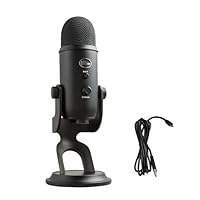
Blue Yeti USB Microphone

Essential VTT Hardware

Webcam, microphone, and drawing tablet picks for DMs and players running Foundry, Roll20, Fantasy Grounds, or Talespire.

Logitech C920 Webcam Blue Yeti Microphone Wacom One Drawing Tablet

2. Roll20 -- Best for Beginners

Roll20 is the most accessible VTT. Open a browser, create a game, invite players via link — you can be playing within 15 minutes. The free tier includes basic maps, character sheets, text and voice/video chat, and dice rolling. No software installation, no server setup, no technical knowledge required.

The marketplace has the largest selection of official D&D content: all published adventures, compendium access, and token packs. Buying an adventure on Roll20 gives you pre-built maps with dynamic lighting, pre-configured encounters, and linked handouts. For DMs who want minimal prep, this is invaluable.

Roll20's limitations become apparent with long-term use: performance degrades with large maps and many tokens, the free tier's 500MB storage fills quickly, and the interface feels dated compared to Foundry. The Plus ($5.99/month) and Pro ($9.99/month) subscriptions add dynamic lighting and API scripting.

3. Fantasy Grounds -- Best for Rules Automation

Fantasy Grounds excels at one thing: automating game rules. When a player attacks, Fantasy Grounds automatically calculates the attack roll, checks AC, applies damage (including resistances and vulnerabilities), and updates HP. Spell effects, conditions, and auras are tracked automatically. For complex combat-heavy campaigns, this automation saves 30-50% of combat time.

The desktop application runs smoothly and supports an enormous library of RPG systems beyond D&D: Pathfinder, Call of Cthulhu, Savage Worlds, and dozens more. The learning curve is the steepest of any VTT — expect 5-10 hours to become comfortable as a DM. The Ultimate license ($149 one-time or $9.99/month) is recommended so players can join free.

4. Owlbear Rodeo -- Best Free VTT

Owlbear Rodeo strips VTT to its essence: upload a map, place tokens, draw on it, roll dice. No accounts, no subscriptions, no setup. Share a link and play. It is perfect for groups that want digital maps without the complexity of a full VTT platform. Think of it as a digital battle mat rather than a game management system.

5. Talespire -- Best 3D Experience

Talespire is unlike any other VTT. Instead of top-down 2D maps, Talespire renders fully 3D environments that players explore from ground level or bird's eye. Building maps is like playing with 3D LEGO. The immersion factor is extraordinary — players literally explore dungeons and castles in three dimensions. Available on Steam for $25 per person.

Using Free Tools Alongside Your VTT

Regardless of which VTT you choose, our free tools complement every platform:

Frequently Asked Questions

What is the best virtual tabletop for D&D in 2026?

Foundry VTT is the best overall for a one-time $50 purchase. Roll20 is best for beginners with its free tier and browser access. Fantasy Grounds has the best rules automation. Owlbear Rodeo is the best free option.

Is Roll20 still worth using in 2026?

Yes, for beginners and groups wanting zero setup. The free tier covers basic needs. However, Foundry VTT offers better performance and more features for groups willing to invest in initial setup.

How much does a virtual tabletop cost?

Roll20: Free to $9.99/mo. Foundry: $50 one-time. Fantasy Grounds: $39-$149 one-time or $3.99-$9.99/mo. Owlbear Rodeo: Free. Talespire: $25/player on Steam.

Do my players need to buy the VTT?

Roll20 and Foundry: players join free via browser. Fantasy Grounds: free if DM has Ultimate license. Owlbear Rodeo: free for all. Talespire: each player buys ($25).

Can I use a VTT for in-person sessions?

Yes. Display the VTT on a TV laid flat on the table for maps and tokens. Foundry VTT and Owlbear Rodeo work especially well for this setup. Our initiative tracker and dice roller complement in-person VTT use.

More from CinderSpire

How virtual tabletops actually work — architecture and the 5e ecosystem

A virtual tabletop (VTT) is a browser or desktop app that hosts a shared map, integrated dice roller, character sheet store, and turn tracker. The three dominant platforms in 2026 are Roll20 (browser-first, subscription model), Foundry VTT (self-hosted or cloud, one-time $50 license per official pricing page), and Fantasy Grounds Unity (desktop client, deep rules automation, subscription or buyout). Each handles the four core tasks — map sharing, dice rolling, sheet storage, and combat tracking — but with very different trade-offs in price, automation depth, and learning curve.

Architecturally, Roll20 runs entirely in the browser with WebSocket sync to a hosted server, which means zero setup but limited customization. Foundry VTT is a Node.js application you either run on your own machine, on a VPS, or on a cloud-hosting partner like The Forge ($3.50–$5/month). Fantasy Grounds Unity is a standalone client connecting to a host's machine via P2P or relayed networking. Foundry's modular architecture (1,500+ community modules) makes it the most flexible but the highest-friction setup; Roll20 is the easiest start; Fantasy Grounds is the most rules-automated for D&D 5e specifically.

Choosing the right VTT is a function of group size, session frequency, budget, and the DM's tolerance for setup work. For a one-shot or new group, Roll20's free tier covers the basics and you can be playing in 15 minutes. For a multi-year campaign, Foundry's one-time $50 with optional $50/year cloud hosting beats every subscription model within 12 months. Fantasy Grounds' deep automation (auto-applies damage, resistances, conditions) saves 30–50% of combat time per official Fantasy Grounds documentation, which is decisive for combat-heavy campaigns.

Most common VTT scenarios — which platform wins each one

  1. One-shot with strangers found online. Roll20 wins. Free tier, browser-only, share a link. Players need zero install. Total setup: ~15 minutes.
  2. 2-year ongoing campaign with rules-deep DM. Foundry VTT wins. $50 one-time + free self-host = $50 total cost vs $240+ for two years of Roll20 Pro. Modules add functionality Roll20 cannot match.
  3. Heavy-combat boss-fight campaign. Fantasy Grounds wins. Auto-applies damage and resistance per attack, tracks conditions, advances initiative — saves 30–50% of round time per the official Fantasy Grounds docs.
  4. Tablet or mobile-only players. Roll20 wins on browser compatibility. Foundry technically works on mobile but the UI is desktop-optimized. Fantasy Grounds requires a desktop client.
  5. Self-hosted with full data control. Foundry VTT wins. You own the world file, can back it up, version it, and migrate it anywhere. Roll20 and Fantasy Grounds keep data on their servers (or require complex export).

Quick-reference table: Roll20 vs Foundry VTT vs Fantasy Grounds (2026)

Feature Roll20 Foundry VTT Fantasy Grounds Unity
PricingFree / $5.99 Plus / $9.99 Pro monthly$50 one-time license (DM only)Subscription or buyout
2-yr cost (DM)~$240 (Pro)~$50 self-host or ~$100 with cloud~$120 sub or $40–$150 buyout
Setup time~15 min (browser)1–3 hours (self-host) or 30 min (Forge)~45 min (install + content)
Browser-onlyYesYes (Foundry serves HTML)No (desktop client required)
Rules automation depthModerate (Pro sheets)Deep (with modules like DAE, Times-Up)Deepest for 5e RAW
Community modulesLimited (Mod Marketplace)1,500+ free modules~200 extensions
5e SRD contentFree (Free Edition)Free (built-in SRD module)Free (5e SRD pack)
Official Wizards contentPurchase per book ($15–$50)D&D Beyond integration (Foundry Beyond)DLC packs ($15–$40 per book)
Combat tracker qualityBuilt-in turn orderAdvanced (with modules)Auto-applies damage/resist/cond
Mobile/tabletBestFunctionalNot supported
Self-hostingNot supportedNative (Windows/Mac/Linux/Docker)P2P or relayed
Data ownershipCloud (export available)You own the world fileLocal + cloud sync
Learning curveEasiestSteepest (rewards effort)Moderate

Pricing verified from official 2026 pages: roll20.net, foundryvtt.com/purchase, fantasygrounds.com.

Pro DM tips for choosing and running a VTT

  • Test with a one-shot before subscribing. Run a 3-hour one-shot on the free tier (Roll20 free, Foundry trial via The Forge, Fantasy Grounds demo) before committing. Most pain points surface within the first session.
  • Match VTT to campaign duration. Less than 6 months: Roll20 Plus. 6–24 months: Foundry self-host. 2+ years with heavy combat: Fantasy Grounds Unity buyout.
  • If your players are mobile-heavy, do not pick Fantasy Grounds. The desktop client requirement kills participation rates — many GMs report 20–30% dropout from mobile-only players forced to install desktop apps.
  • Start with the SRD pack, not a paid module. The 5e SRD covers ~70% of standard play. Add paid books later when you know what your campaign actually needs.
  • Pair your VTT with a separate voice client. Roll20's built-in voice is workable; Discord still dominates for voice quality and stability. Most DMs run Foundry/Fantasy Grounds + Discord side-by-side.
  • Back up your campaign weekly. Foundry world files can be zipped to local disk. Roll20 has a "Settings → Export" option. Fantasy Grounds saves campaigns locally by default. Lose a campaign once and you will never skip a backup again.
  • Buy modules incrementally. Foundry's 1,500+ free modules tempt you to install 80 of them. Add 5–10 at a time, play 2 sessions, then add more. Module conflicts are the #1 Foundry support issue.

Common mistakes when picking or using a VTT

  • Over-investing in modules before learning the platform. Foundry users routinely buy 20+ modules in week one and then cannot diagnose conflicts. Start with the official 5e system module + 5–10 essentials only.
  • Comparing VTT pricing without including hosting. Foundry is $50 one-time but you need a host. The Forge averages $50/year. Total 2-year cost is ~$150, not $50, if you use cloud hosting.
  • Assuming Fantasy Grounds runs in a browser. It does not. Fantasy Grounds Unity is a downloadable Windows/Mac client. Check your players' OS before committing.
  • Ignoring official content licensing. Wizards of the Coast official 5e content (PHB/DMG/MM digitally) must be purchased per platform. Roll20 PHB is a separate purchase from Fantasy Grounds PHB, even if you own the physical book.
  • Migrating mid-campaign on a whim. Moving a 6-month campaign from Roll20 to Foundry takes 10–20 hours of map re-import, sheet conversion, and journal re-entry. Plan the switch between campaigns, not during one.

Complementary hardware and software for VTT play

A serious VTT setup benefits from a second monitor (DM screen + map), a quality headset (3+ hour sessions demand comfort — see headset comparisons from Rtings), and reliable home internet (Foundry self-host needs 5+ Mbps upload). For dice-driven random tables outside your VTT, plug expressions into anydice.com. For encounter prep before each session, use our encounter calculator — cited next to the official DMG p.82–83 XP thresholds. For initiative inside any VTT, the built-in trackers handle 95% of needs; the rest gets covered by community modules like Improved Initiative or Combat Utility Belt for Foundry.

Save 30–50% of combat time with rules automation

Per official Fantasy Grounds documentation, automated rules application (attack → AC → damage → resistance → HP update) cuts combat-heavy session time roughly in half. Worth evaluating for 5e campaigns past level 10.

Compare Fantasy Grounds plans

FAQ — VTT comparison for D&D 5e

Which VTT is cheapest long-term?

Foundry VTT self-hosted: $50 one-time license + free local hosting = $50 total. Two years of Roll20 Pro is ~$240; Fantasy Grounds buyout is $40–$150 depending on tier. Foundry wins on pure dollar cost past month 5.

Which VTT is easiest for total beginners?

Roll20. Browser-only, no install, shareable link. Free tier covers basic maps, character sheets, dice, voice and video chat. Most DMs running a one-shot start playing within 15 minutes.

Does Foundry VTT support D&D Beyond integration?

Yes, via the D&D Beyond Importer module and Foundry Beyond companion app. Setup is moderately technical but provides full character-sheet sync from your D&D Beyond account.

Can I run Fantasy Grounds on a Mac?

Yes, Fantasy Grounds Unity has native Mac and Linux clients in addition to Windows. The Classic version was Windows-only; Unity (released 2020) is cross-platform.

How much does cloud hosting Foundry actually cost?

The Forge (Foundry's official partner) is $3.50–$5/month depending on tier. Other options include Molten Hosting, Tinker Hosting, or self-host on a $5/month VPS like DigitalOcean.

Is the Roll20 free tier good enough for a campaign?

For short campaigns or new groups, yes. It caps storage at 100 MB and disables dynamic lighting and API scripts. For multi-year campaigns with custom assets, Plus or Pro becomes necessary.

Does Fantasy Grounds support 5e 2024 / One D&D rules?

Yes, the 2024 PHB and DMG are available as official DLC. Existing 2014 ruleset content remains compatible; the platform supports running both side-by-side.

Which VTT has the best community module support?

Foundry VTT by a wide margin: 1,500+ free community modules covering UI improvements, automation, dice physics, audio, weather, and dozens of niche use cases. Roll20's API scripts and Fantasy Grounds' extensions are smaller ecosystems.

Can I migrate my campaign between VTTs?

Partially. Maps re-import as images. Character sheets do not transfer directly between platforms. Plan 10–20 hours of manual conversion if you switch mid-campaign.

Do I need to buy the PHB digitally for each VTT?

Yes. Official Wizards of the Coast content is licensed per-platform: a Roll20 PHB purchase does not unlock the Foundry or Fantasy Grounds version. The SRD (basic rules) is free on every platform.

What internet speed do I need to host Foundry VTT?

5+ Mbps upload supports up to 5 players smoothly. Maps with high-resolution images or video may need 10+ Mbps. Cloud hosting on The Forge eliminates the requirement.

Is there a totally free VTT alternative?

Yes — Owlbear Rodeo (limited free tier), Roll20 Free, and lightweight tools like Improved Initiative or Above VTT exist. For most longer-term campaigns, paying $50 once for Foundry is the best value.

Reviewed by: Mustafa Bilgic (Adıyaman, Türkiye), independent operator. Pricing and feature data verified from roll20.net, foundryvtt.com, fantasygrounds.com. Last updated 2026-05-20.